CC Logo A Public Service of USC
Schedule
HostsWays to Give
Donate
Loading profile
HomePlaylistSchedule
HostsEventsOn DemandOur StoryOur TeamWays to Give Become a Sponsor
How to ListenVisit Help CenterContact Us

Find Us on Social Media

CC Logo White Horizontal A Public Service of USC

Download Our Mobile App

Google Play Icon

About

HomePlaylistSchedule
HostsOn DemandOur StoryOur Team

Community

EventsWays to Give Become a SponsorPressDiversity StatementCareersKUSC EEO ReportKDFC EEO ReportDigital Accessibility

Help

How to ListenVisit Help CenterContact Us

Find Us on Social Media

Sweepstakes RulesKUSC Local Public FilesKDFC Local Public FilesPrivacy PolicyCode of Integrity

©2026 Classical California

GettyImages-89116379

articles / Music Theory

Twentieth Century Topics: What About John Cage?

Photo by Rowland Scherman/Getty Images

Music TheoryMusic History

John Cage was definitely the twentieth century’s foremost musical iconoclast, a composer whose iconoclasm was expressed in a number of ways. I’ll address two of those ways in this column. (Expect more on Cage at a future date.)

Cage said: “There is no such thing as an empty space or an empty time. There is always something to see, something to hear. In fact, try as we may to make a silence, we cannot.”

He demonstrated this idea in his 1952 piece 4’33”. A pianist who performs it sits at the keyboard for that length of time without playing anything.

So is it 4’33” of silence? Hardly. For a number of years I taught a course on twentieth century music at Occidental College. One day I performed 4’33”. Afterward I asked the students what the content of the piece was. The consensus was “nothing.” Then I revealed that I had recorded the performance and when I played it back they were amazed by the

variety of ambient sounds: shuffling of papers, moving of feet, giggling, etc. As Cage said, “There is always something to hear.”

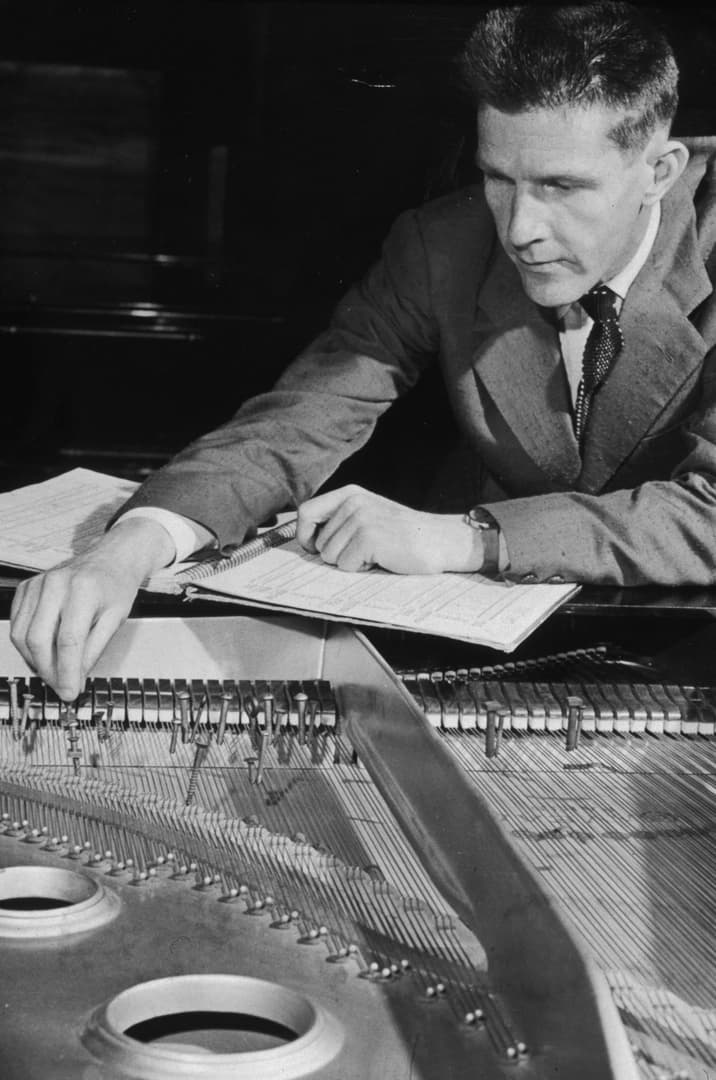
The idea for 4’33” dates back to the late 1940s, when Cage was working on his Sonatas and Interludes, pieces for prepared piano. Here’s the composer preparing a piano in 1950.
GettyImages-3238707

June 25, 1949: American author and experimental composer John Cage Jr changing the tuning of his piano by placing coins and screws between the strings ('treating') in Gaveau Auditorium, Paris, France.

Photo by New York Times Co./Getty Images

Objects of metal, rubber, and plastic are placed in precise locations in contact with specific strings. Everything is specified in the table of preparations.
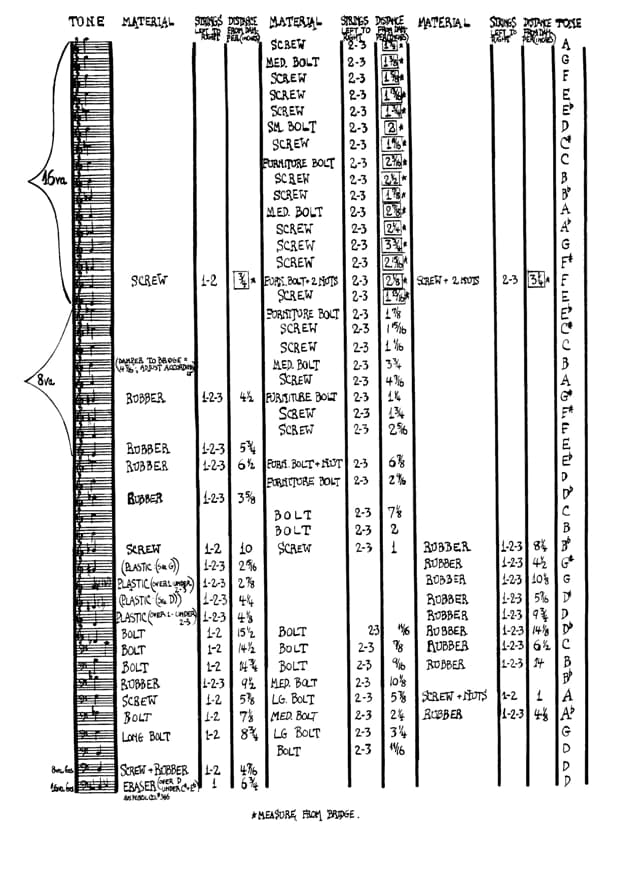
John Cage - table of preparations

The pianist plays normally while the inserted objects modify the sound of the piano.

Here’s a sample:

John Cage: Sonatas and Interludes for Prepared Piano: Sonata V

A closing quote from John Cage: "I can't understand why people are frightened of new ideas. I'm frightened of the old ones."

Music TheoryMusic History
Published on 11.23.2026

MORE LIKE THIS

Prokofiev thumb

Twentieth Century Topics: Young Prokofiev

Alan Chapman dives into the childhood and life of Sergei Prokofiev to uncover the artist's inspiration to his masterworks.

07/15/2026
arvo and copland main

Twentieth Century Topics: Switching Gears

Alan Chapman reveals how Aaron Copland and Arvo Pärt reinvented themselves and in the process reshaped twentieth‑century music and deepened its connection with audiences worldwide.

03/19/2026
Violin-Sheet-Music.jpg

Chapman Challenge: What Exactly Are Köchel Numbers?

This article explains Köchel numbers, a cataloging system for Mozart's works created by Ludwig von Köchel in the 19th century, and its significance in music history.

01/26/2021
Violin-Sheet-Music.jpg

Chapman Challenge: What Exactly Are Köchel Numbers?

This article explains Köchel numbers, a catalog system for Mozart's works created by Ludwig von Köchel in the 19th century, and its significance in musicology.

01/26/2021
LA-Opera-Rigoletto-PC-Ken-Howard-1.jpg

What “Rigoletto” Says About Verdi’s Career Evolution

LA Opera's artist in residence, Matthew Aucoin, conducts Verdi's Rigoletto, praising Verdi's ability to evolve his work while maintaining audience appeal. Show runs until June 3rd.

10/01/2018
Chopin.jpg

What Happened to Chopin’s Heart?

Explore the intriguing tale of Frederic Chopin's heart, removed post-death and preserved in cognac, now resting in Warsaw, separate from his body in France.

08/28/2017