Logo image
Schedule
HostsWays to Give
HomePlaylistSchedule
HostsEventsOn DemandOur StoryOur TeamWays to Give Become a Sponsor
How to ListenVisit Help CenterContact Us

Find Us on Social Media

Logo image

Download Our Mobile App

google play icon

About

HomePlaylistSchedule
HostsOn DemandOur StoryOur Team

Community

EventsWays to Give Become a SponsorPressDiversity StatementCareersKUSC EEO ReportKDFC EEO ReportDigital Accessibility

Help

How to ListenVisit Help CenterContact Us

Find Us on Social Media

Sweepstakes RulesKUSC Local Public FilesKDFC Local Public FilesPrivacy PolicyCode of Integrity

©2026 Classical California

articles / Music History

Turning Tragedy into Art
Music HistoryPop CultureArts Alive Blog


Hit play below to listen to our Arts Alive feature on Paul Wittgenstein.
 

Turning Tragedy into Art
00:00


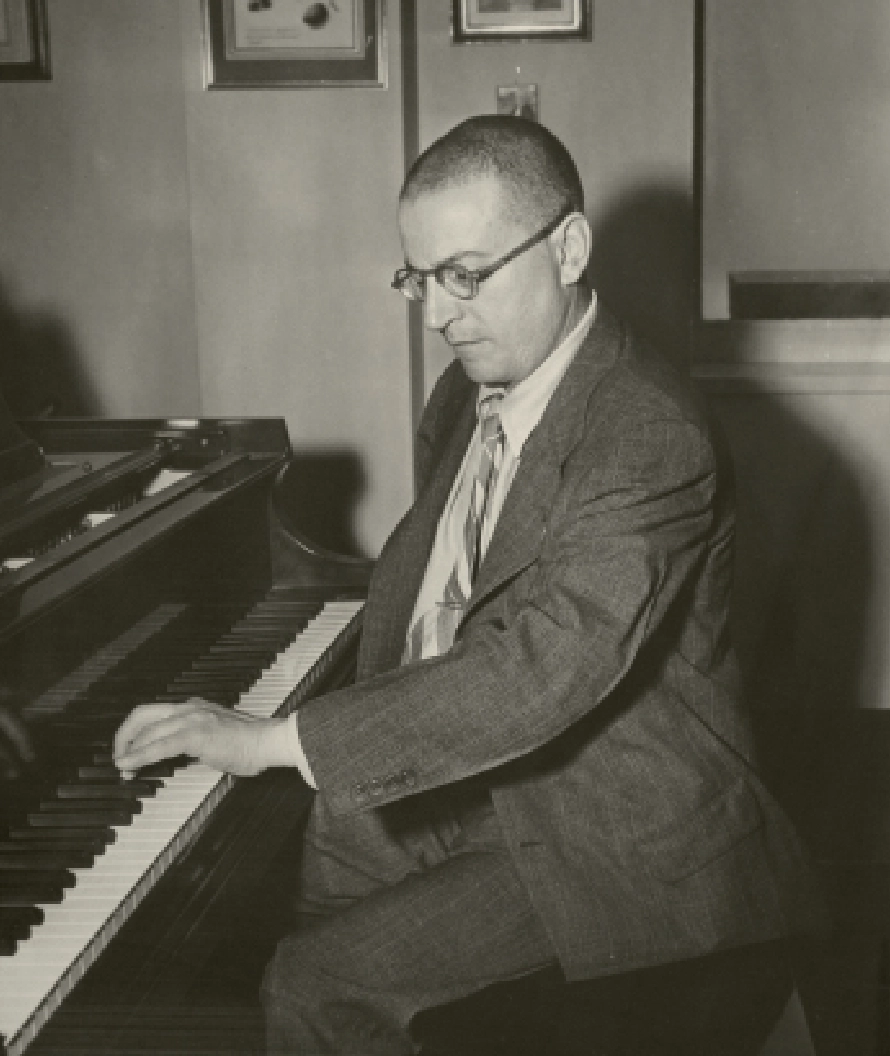
Paul Wittgenstein was a young Austrian soldier fighting in World War One when a bullet struck his elbow. That injury led not only to a profound change in the life of the young concert pianist, but also to the creation of many works written specifically for him, by some of the greatest composers of the day. Here’s a look at some of those works of art that aren’t heard as frequently as the concerto that Maurice Ravel wrote for him.

Wittgenstein was from a well-to-do family (his brother was the philosopher Ludwig Wittgenstein) and had received good reviews when he had his debut recital in 1913. But early in the first World War the next year, his injuries led to the amputation of his right arm. While there were pieces written only for the left hand, they were few, and mostly served as etudes to strengthen what for many people is the non-dominant hand. When Wittgenstein determined he wouldn’t give up his career as a pianist, he decided to commission the repertoire that he would play. There were many who he approached, including Franz Schmidt, an Austrian composer who is not well known today, who wrote this concerto (the piano comes in after a 3:00 introduction):

Another Austrian composer was Erich Wolfgang Korngold, a bit of a wunderkind already, having written several successful operas by the time he was in his mid-20s. Later, as World War II approached, he would emigrate to the United States to become a composer of some of the great Hollywood films.

Wittgenstein and Ravel had a falling out over the changes he wanted to make (and did) in early performances, but he eventually came around to playing it as written.

There were at least two of the works written for him that Wittgenstein didn’t play. He shelved the concerto by Paul Hindemith (it was found after the death of his wife among her papers) and said he didn’t understand Sergei Prokofiev’s Fourth Piano Concerto well enough to play it.

Music HistoryPop CultureArts Alive Blog
Written by:
Jeffrey Freymann
Jeffrey Freymann
Published on 04.01.2019
Loading...

MORE LIKE THIS

Henry Purcell’s “King Arthur” Gets a Dramatic Makeover

Henry Purcell’s “King Arthur” Gets a Dramatic Makeover

Long Beach Opera collaborates with Musica Angelica and Culture Clash to reimagine Henry Purcell's semi-opera, King Arthur, as a superhero story. Performances in January at Beverly O’Neill Theater.

01/10/2020
‘Salonnieres’ Celebrated at Valley of the Moon Music Festival

‘Salonnieres’ Celebrated at Valley of the Moon Music Festival

The Valley of the Moon Music Festival honors women who financially and emotionally supported classical composers, including a countess, princesses, and overlooked female composers.

10/01/2019
Slicing Music History into Decade-Sized Pieces…

Slicing Music History into Decade-Sized Pieces…

Music@Menlo's new season, "Incredible Decades," explores seven distinct periods in music history, from Bach's era to the Y2K fears, curated by directors David Finckel and Wu Han.

10/01/2019
An Entire City Must “Shh!”

An Entire City Must “Shh!”

Explore how Cremona, home to the world's finest violins, strives to preserve their unique sound amidst the challenges of a bustling medieval town.

06/03/2019
One More Trip to the Bob Baker Marionette Theater

One More Trip to the Bob Baker Marionette Theater

The Bob Baker Marionette Theater, a 55-year-old institution, is set to close after Thanksgiving. However, the puppet shows will continue at a new, yet-to-be-named location.

04/01/2019
700 Years of Music History on the Piano

700 Years of Music History on the Piano

Pianist Jeremy Denk chronicles 700 years of western music in one concert and album, c. 1300- c. 2000, highlighting the evolution and loss of musical styles over time.

03/26/2019