
articles / Saturday Morning Car Tunes
Saturday Morning Car Tunes: Antonín Dvořák
Joel Carillet/Getty Images
Bettmann/Getty Images
Listen to the episode!
What do Disney's The Little Mermaid, the anime One Piece, and Sam Cooke all have in common? Dvořák has this answer.
Howdy, howdy, howdy! I’m Solomon Reynolds, and this is: Saturday Morning Car Tunes! This morning...
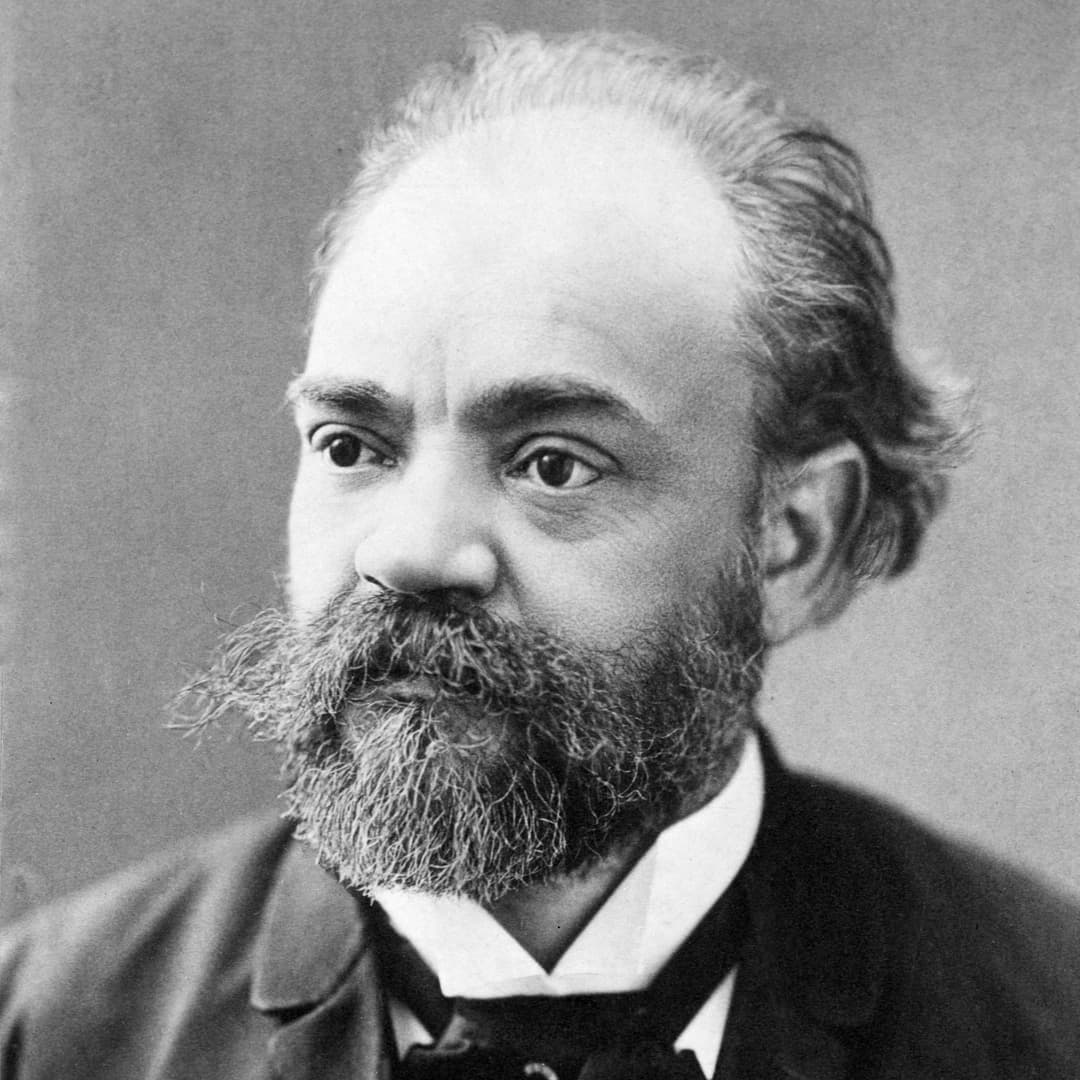
Born in 1841, Antonín Dvořák is one of the greatest Czech composers in history. As someone who wrote quickly and off the cuff, his publisher said he could “pull melodies out of his sleeve.” Dvořák’s music spans almost every genre: operas, symphonies, symphonic poems, overtures, and serenades. This is from his Serenade for Strings.
What made Dvořák’s melodies so tuneful and memorable was that he often turned to Bohemian folksongs, like this one. His Slavonic Dance Op. 46, No. 7 refers to the dance song, “Where Are You Going, Auntie?”
"Tetka kam dete?"
Dvořák was good friends with many of the leading composers of his day, including Johannes Brahms, Peter Tchaikovsky, and the violinist Joseph Joachim. In fact, he wrote his Violin Concerto with Joachim in mind.
In his Cello Concerto, Dvořák quotes a melody from his own song, “Leave Me Alone with My Dreams,” written in memory of his sister-in-law who passed away. Performed here with solo violin, the Cello Concerto is one of Dvořák’s most personal works.
Dvořák was unapologetically Czech and loved his homeland. His favorite place in the world was a small country property in a south Bohemian silver-mining town, where he spent the summer months with his family. Based on folk music, his overture My Homeland uses a melody that later became the Czech national anthem.
"Kde domov můj"
While Dvořák wrote orchestral pieces throughout his life, opera was his main focus from the beginning. His most successful opera was Rusalka, which shares some of the same story with Disney’s The Little Mermaid (1989).
"Under the Sea"
In the 1890s, Jeannette Thurber, president of the National Conservatory of Music of America, asked Dvořák to help create an American style of art music. While looking for material, Dvořák drew on two American sources: spirituals and plantation songs; and transcriptions of Native American melodies. These shaped his U.S. work, including the “American” String Quartet No. 12.
One of Dvořák’s students set words to the Largo melody from the second movement of his “New World” Symphony No. 9. Many people thought it was a Black American spiritual, but it was really just inspired by them. Here’s singer-songwriter Sam Cooke performing it.
The finale of Dvořák’s Symphony No. 9 has influenced countless pieces of pop culture, coming in at #3 on last year’s Ultimate 101 playlist. During Monkey D. Luffy’s iconic fight against Crocodile in the Alabasta arc of the One Piece anime, the animators thought Dvořák’s Ninth really packed a punch.
Luffy vs. Crocodile
Great music? Czech!
I’m Solomon Reynolds. I write and produce Saturday Morning Car Tunes with research assistant Carolina Correa and audio engineer Stephen Page, only on Classical California. Tune in—or out of your car—next Saturday morning!


