articles / Saturday Morning Car Tunes
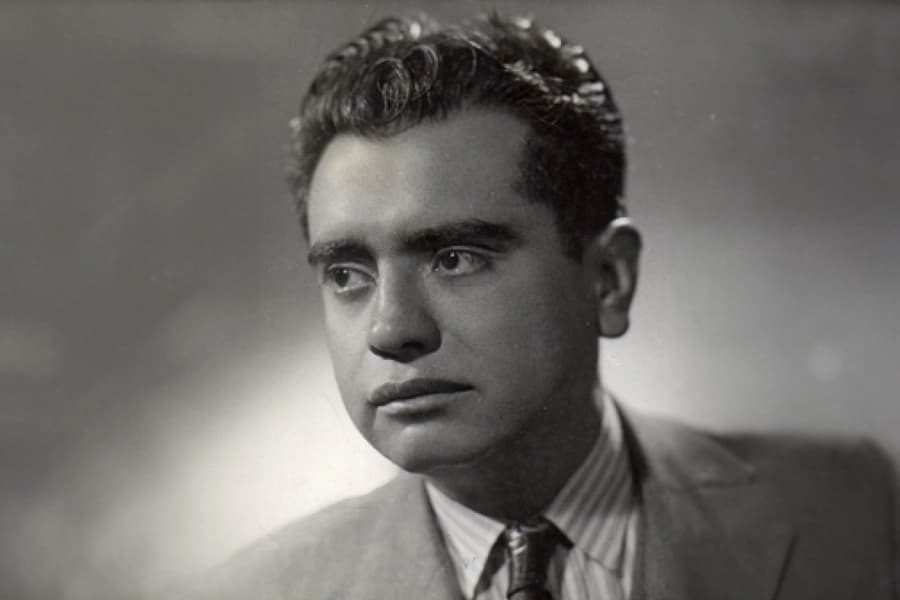
Saturday Morning Car Tunes: José Pablo Moncayo
Earl Leaf/Getty Images
Listen to the episode!
¡Bienvenidos, cuates! Welcome to Mexico and the "Aztec Renaissance." One of Mexico's greatest composers, José Pablo Moncayo captured his country in music, from sonatas and symphonies to a ballet, a film score, and an opera. Celebrate Hispanic Heritage Month with music that'll make you want to dance.
Howdy, howdy, howdy! I’m Solomon Reynolds, and this is: Saturday Morning Car Tunes! This morning…
The Three Caballeros Song (1944)
José Pablo Moncayo was a Mexican composer, born in Guadalajara in 1912. Along with Silvestre Revueltas and Carlos Chávez, he’s considered one of Mexico’s greatest composers. His distinctly Mexican music helped shape the country’s national style. You’re listening to his orchestral piece Forests.
Moncayo started taking piano lessons when he was 14. Three years later, he was accepted into the National Conservatory of Mexico. Not long after, his father died, and Moncayo supported his family and paid for his schooling by playing piano in Mexico City’s nightclubs.
Moncayo was one of the youngest composition students of Carlos Chávez, Mexico’s greatest composer at the time. Chávez introduced him to the “Aztec Renaissance,” a movement that tried to bring back the music from before the Spanish conquest. In his Sinfonía india, Chávez quotes real Mexican Indian themes.
Moncayo also studied with the American composer Aaron Copland, a friend of Carlos Chávez. Chávez once took Copland to a dance hall in Mexico City, part of the same nightlife Moncayo played in as a teenager. The visit inspired Copland’s El Salón México.
Moncayo and three other Chávez students, Daniel Ayala, Salvador Contreras, and Blas Galindo, became known as El Grupo de los Cuatro (The Group of Four). Together, they combined Mexican culture with classical forms. That nationalist spirit led Moncayo to write his Sinfonietta.
Moncayo’s music wasn’t just popular in Mexico. The Louisville Orchestra in Kentucky commissioned and premiered his work Summits.
Moncayo wrote all kinds of music: sonatas, symphonies, ballets. His opera The Woman of Córdoba tells the story of an enchantress sentenced to death who vanishes just before her execution in a boat made of fire. It’s considered one of the best 20th-century Mexican operas.
Moncayo also wrote movie music, including part of the score for the 1954 film Roots, later screened at the Cannes Film Festival in France.
Raíces (1954)
Moncayo's portion of the score begins with "La potranca" at 1:08:28.Moncayo went to Veracruz, a port city in eastern Mexico, to research local folk music. There he discovered huapangos, a style of dance music where dancers stomp on a wooden platform, like in “El balajú” from the 1942 film A Great Love Story. Can you here ‘em dancing?
Historia de un gran amor (1942)
Those dance songs inspired Moncayo's most famous piece, Huapango.
It’s not Mexi-can’t—it’s Mexi-can!
I’m Solomon Reynolds. I write and produce Saturday Morning Car Tunes with research assistant Carolina Correa and audio engineer Stephen Page, only on Classical California. Tune in—or out of your car—next Saturday morning!