articles / Saturday Morning Car Tunes
Saturday Morning Car Tunes: Clara Schumann
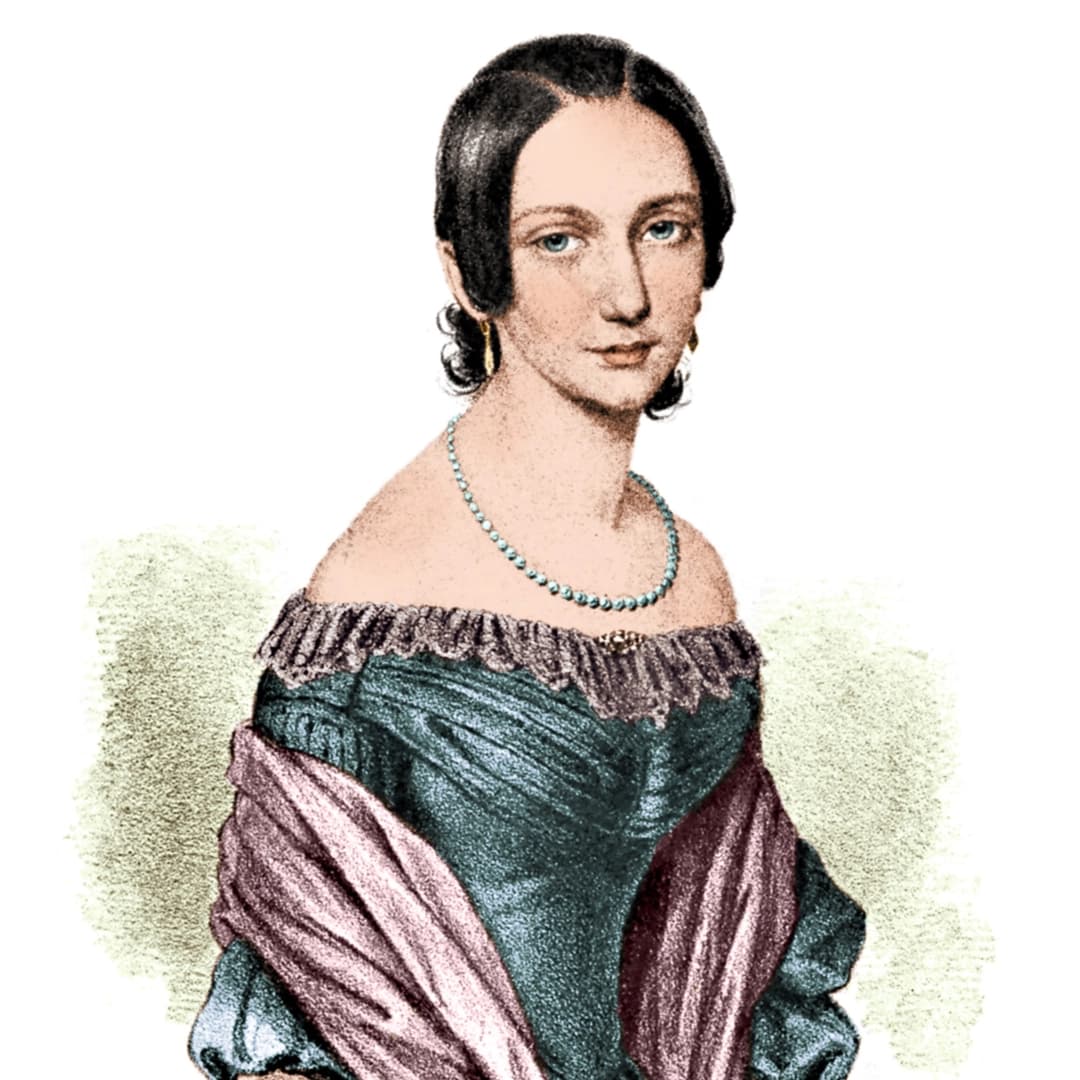
A potrait of Clara Schumnann, featured on the 100 Deutsche Mark. (Cebas/Getty Images)
Getty Images
Listen to the episode!
From child prodigy to one of Europe's greatest pianists, composers, and teachers—this Wieck, find out if the Schu fits.
Howdy, howdy, howdy! I’m Solomon Reynolds, and this is: Saturday Morning Car Tunes! This morning… Clara Wieck was a German composer and child prodigy. Born in 1819, she gave her first public piano performance just after her ninth birthday and went on to become one of the greatest pianists in the world. This is a polonaise from her Opus 1, published a few years later.
Clara’s dad was a very good piano teacher. A young pianist came to study with him, and, as was the custom, lived with the Wieck family. His name was Robert Schumann, and he and Clara would go on to shape each other’s music for the rest of their lives. When she was 12, Clara gave the first performance of Robert’s piano suite Butterflies.
Robert quickly became very important to Clara. She dedicated her Romance with Variations to him.
Clara premiered her Piano Concerto in A minor when she was 16. You’re listening to the second movement, another romance. (It’s almost like Clara wrote Robert into the score as a cello.)
The day before her 21st birthday, Clara Wieck and Robert Schumann got married. Their marriage was full of music. For their first Christmas together, Clara gifted Robert this song: “I Stood Darkly Dreaming.”
Their lives were so tied together that her first published work as a married woman was a joint collection of songs—three by Clara and the rest by Robert. This is “He Came in Storm and Rain,” one of Clara’s three.
Clara would sometimes recycle melodies from her songs. Doesn’t her Scherzo No. 2 sound familiar?
Clara was an internationally famous pianist and the breadwinner in the Schumann household. Throughout her career, she performed over 1,300 concerts. In her day, audiences were used to hearing pianists play fancy piano versions of popular opera tunes. Clara based this music on an aria from Bellini’s opera The Pirate.
Over time, her concerts became less showy and more serious. In her hands, the piano recital focused on the composer rather than the performer. Inspired by Bach, this is a fugue she wrote.
While Clara Schumann’s music wasn’t fully explored until the 1960s, her music is being revived through recordings and broadcasts. The Europeans, a British film from 1979, used the andante third movement of Clara’s Piano Trio as its main theme. The film was later nominated for an Oscar.
THE EUROPEANS (1979) - Trailer
It’s not auramaxxing—it’s Claramaxxing.
I’m Solomon Reynolds. I write and produce Saturday Morning Car Tunes with research assistant Carolina Correa and audio engineer Stephen Page, only on Classical California. Tune in—or out of your car—next Saturday morning!