articles / Brahms
Saturday Morning Car Tunes: Johannes Brahms
Berni Schoenfield/Getty Images
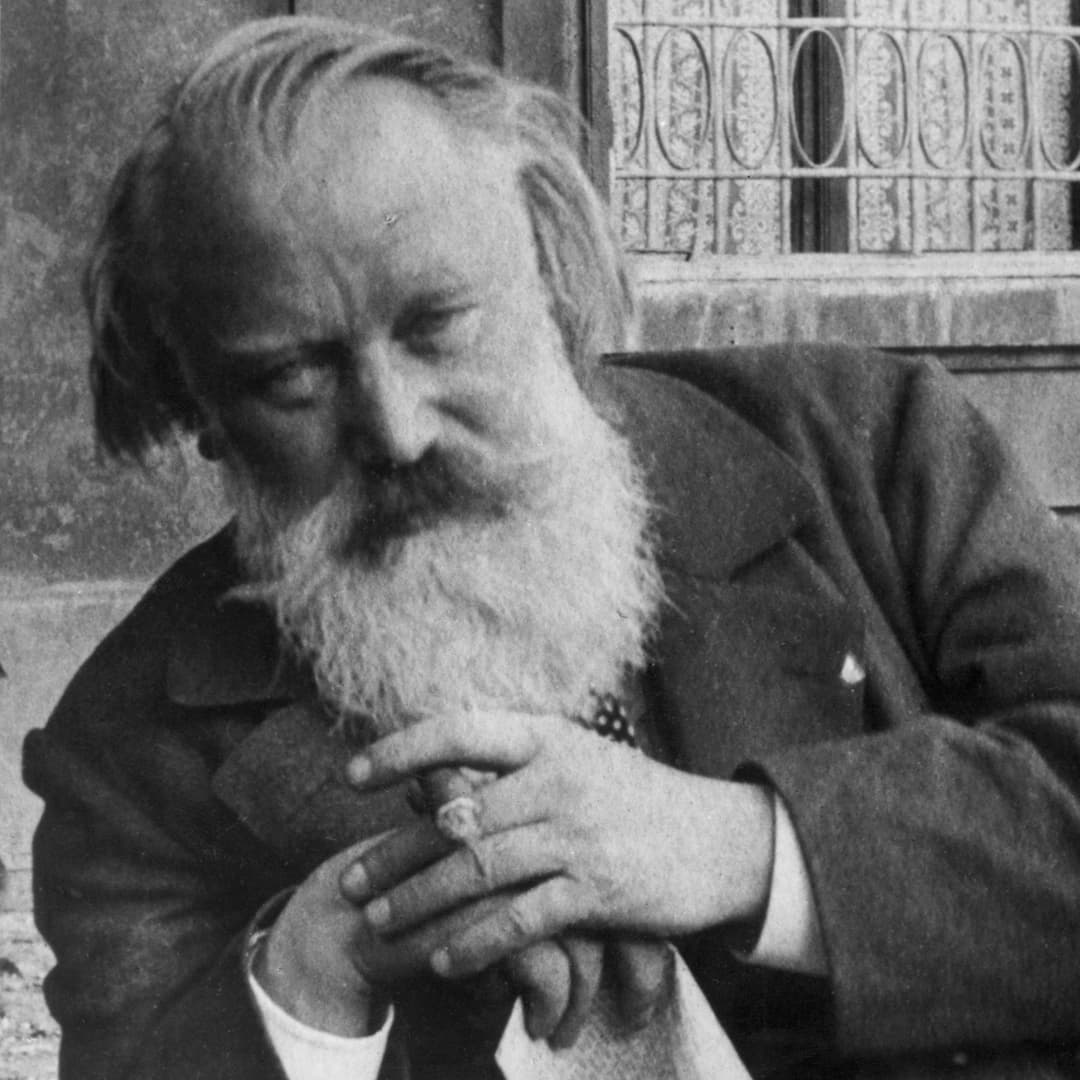
Bettmann/Getty Images
Listen to the episode!
Brahms the pop star? His melodies show up in movies, cartoons, even pop songs, because he loved popular music too! Tune in this week for a lullaby, a Hungarian dance, student drinking songs, and Frank Sinatra.
Howdy, howdy, howdy! I’m Solomon Reynolds, and this is: Saturday Morning Car Tunes! This morning…
Born in 1833, Johannes Brahms was a German Romantic composer who came after Beethoven, Schubert, and Schumann. As a kid, people say he played the piano in sailors’ bars to help earn money for his family. The folk and popular music he played there shows up in his own compositions. His Piano Sonata No. 1, which you're listening to right now, was inspired by both Beethoven and folk songs.
Brahms studied the musical past but also looked toward what the future could sound like. He pushed the boundaries of Classical forms through variations, taking a melody and playing it as many ways as he could imagine. These are his Variations on a Theme by Handel, which he called his “favorite work.”
But Brahms wasn’t just good at writing piano variations. He could also handle a whole orchestra. His Variations on a Theme by Haydn was the first orchestral piece where he combined everything he’d learned from older composers into something new, genuinely his own.
Because Brahms loved and collected so many folk songs, he got really good at writing melodies. You’ve probably already heard his most famous one.
Brahms never wrote an opera—he could never find a libretto, or story, he liked. But many think his German Requiem is his greatest work. Instead of writing it in the traditional Latin, Brahms set the text in German, although he said it could be just called a “human” requiem. Critics raved, and the piece made Brahms a major European composer.
When Hungarian refugees passed through Germany, Brahms met the violinist Ede Reményi, who taught him about the Hungarian style, a mix of Hungarian and Romani musics. The third movement of Brahms' Violin Concerto is his greatest work in the Hungarian style and was featured in the 2007 film, There Will Be Blood.
In fact, film, TV, and pop culture love Brahms’s Hungarian music. His Hungarian Dance No. 5 shows up all over the place: in a Looney Tunes cartoon, a Charlie Chaplin movie, and even an episode of The Simpsons.
One reason pop culture loves Brahms’s music so much is that Brahms himself borrowed from the pop music of his day. When the University of Breslau offered him an honorary doctorate, Brahms wrote his Academic Festival Overture for the occasion. The piece is packed with half a dozen popular tunes and songs the students would recognize.
Brahms’ four symphonies were milestones in German music, some of the most important pieces written in the 19th century. His Third Symphony reached a new level of form, balance, and coherence. The third movement was so good, Frank Sinatra wrote it into his song, “Take My Love.”
Brahms! He's the bombs dot coms.
I’m Solomon Reynolds. I write and produce Saturday Morning Car Tunes with research assistant Carolina Correa and audio engineer Stephen Page, only on Classical California. Tune in—or out of your car—next Saturday morning!