
articles / Halloween
Saturday Morning Car Tunes: Death
Gwengoat/Getty Images
Gwengoat/Getty Images
Listen to the episode!
Death can be sad and scary. But as John Dowland said, “no doubt pleasant are the tears which Music weeps, neither are tears shed always in sorrow, but sometimes in joy and gladness.” Tune in this week to hear what death can sound like: spooky, silly, and bittersweet.
Howdy, howdy, howdy! I’m Solomon Reynolds, and this is: Saturday Morning Car Tunes! This morning…
Death! Composers have been writing about it since at least the Middle Ages. The Dies irae, Latin for the “day of wrath,” when the dead are judged for their sins, was a 13th-century poem set as a chant and sung by monks during Requiem Masses, church services for the dead. That ancient melody came to represent the fear of death and the supernatural—perfect for spooky season! Berlioz used the Dies irae in his Symphonie fantastique.
Since Berlioz, the Dies irae chant has probably become the most quoted melody in classical music. Even today, composers still use it to sound scary, like in Danny Elfman’s score for The Nightmare Before Christmas. Instead of quoting the original chant, Verdi composed his own setting in his Requiem, making it as terrifying as possible. Mozart died while writing his Requiem, so in a way he wrote his own funeral music. You’re listening to the Lacrimosa, Latin for “weeping” or “tearful.” Does it make you sad?
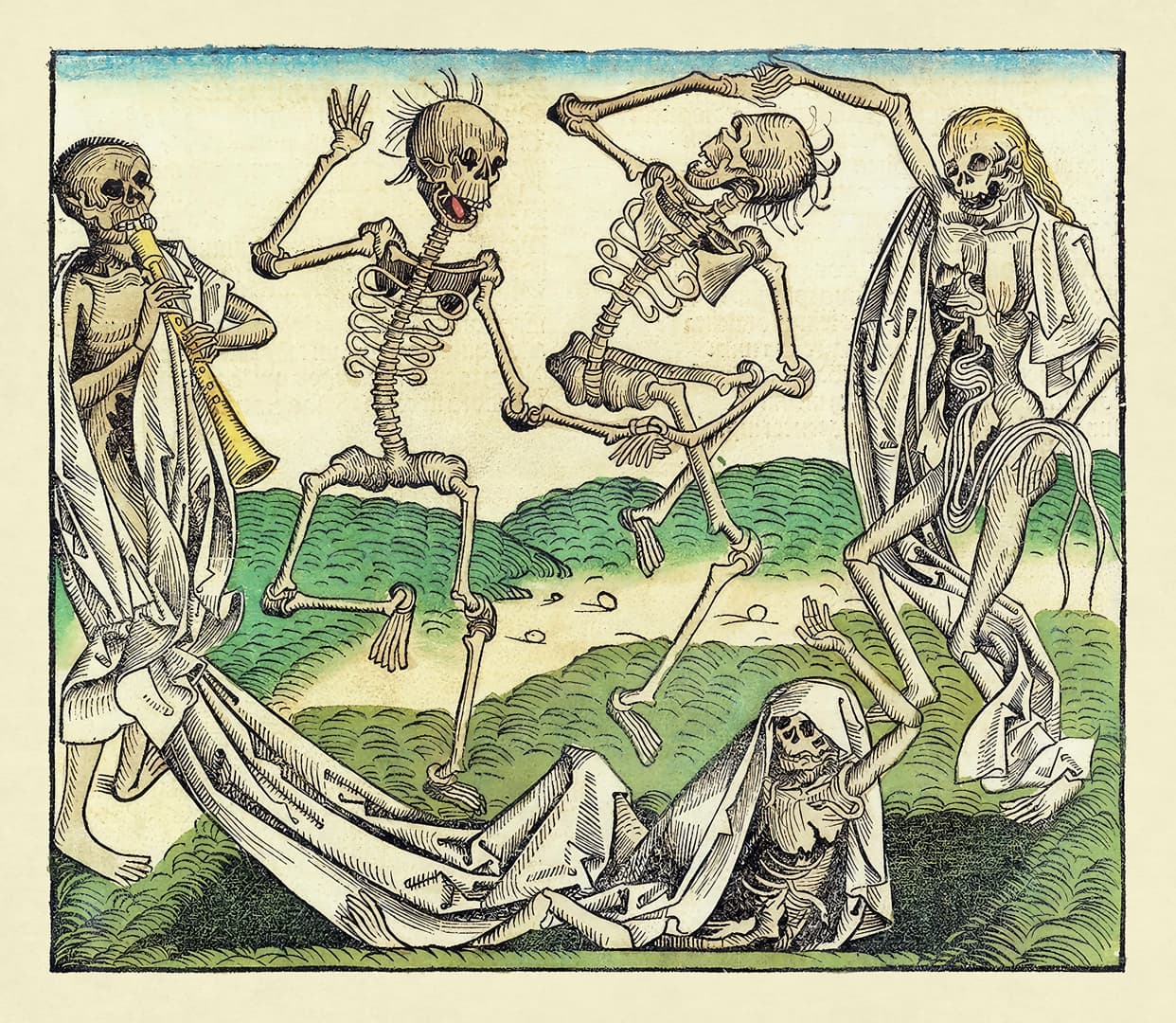
The bubonic plague, or Black Death, killed over a third of Europe in the 14th century, which helped inspire the danse macabre, an image of Death as a skeleton leading the living to the grave. Saint-Saëns took a more playful approach in his Dance of Death.
After Schubert got sick and thought he was dying, he wrote his String Quartet No. 14, known as “Death and the Maiden.”
Marches have strong, simple rhythms that repeat over and over, perfect for keeping soldiers in step. They’re also important at funerals. Chopin’s funeral march, from his Piano Sonata No. 2, is very famous. WWE wrestler The Undertaker uses its opening in his entrance theme.
Charles Gounod’s Funeral March of a Marionette later became the theme song of the TV show Alfred Hitchcock Presents. Your grandparents might remember watching it.
Death is a part of life and can make us scared, sad, or hurt. But on Día de los Muertos, the Day of the Dead, we honor and celebrate the lives of loved ones who have passed away, like in “Remember Me” from Disney-Pixar’s Coco.
Death can be bittersweet, too.
I’m Solomon Reynolds. I write and produce Saturday Morning Car Tunes with research assistant Carolina Correa and audio engineer Stephen Page, only on Classical California. Tune in—or out of your car—next Saturday morning! And happy Halloween!


